
How many restrooms does a race actually need?
It depends on runner count, course length and how many aid stations you're staffing. A rough rule: figure one standard porta potty rental per 75 to 100 participants at the start line, plus units at every aid station past mile 4. A 5K through Castro Valley with 300 runners might need six units at the start and two at the finish. A half marathon with three aid stations needs restrooms staged at each one, not just clustered at start and finish. OSHA 1926.51(c) sets ratios for job sites, not races, but it's still the industry reference point crews lean on when nobody's given them a headcount. If you're not sure, our how many porta potties do I need guide walks through the math, or just call and give us the runner count. Every cluster of units needs an accessible one too. ADA Standards section 213.2 requires at least 5 percent of clustered single-user units to be accessible, never fewer than one, so a bank of six at your start line needs an ADA accessible porta potty in the mix. We also stage handwashing station rental units near food and medical tents, since aid station volunteers handle gel packets and bandages all day.
Where should restrooms go on a race course?
Aid stations, the start corral and the finish chute, always set back from the running line itself. Placement matters more on a course than almost anywhere else we work, because runners are moving past at pace and a unit sitting in the wrong spot becomes a hazard instead of a convenience. We keep units on stable, level ground per ADA Standards section 302.1, with a 60 inch turning circle in front of accessible units per ADA Standards section 304.3.1, and we never block a route that needs to stay clear for medical carts or lead vehicles. If your course runs near a road crossing that also needs barricades, pair restroom placement with crowd control barrier rental so volunteers aren't managing two separate setups. Some races run power to a timing tent or a med station nearby; if you're setting a temporary power pole for that, brace it against a stable base and keep guy lines clear of the runner lane, and brace it with a stable base plate and cross-braced legs rated for the pole height, since a pole that shifts under load near a finish chute is a bigger problem than a full holding tank; that's the same bracing approach we use whenever we're asked how to brace a temporary power pole on a tight course footprint. Our porta potty placement guide covers ground clearance and access lanes for events with vehicle delivery, which matters if your course loops through Castro Valley neighborhoods with tight street parking.
What's the difference between a 5K setup and a marathon setup?
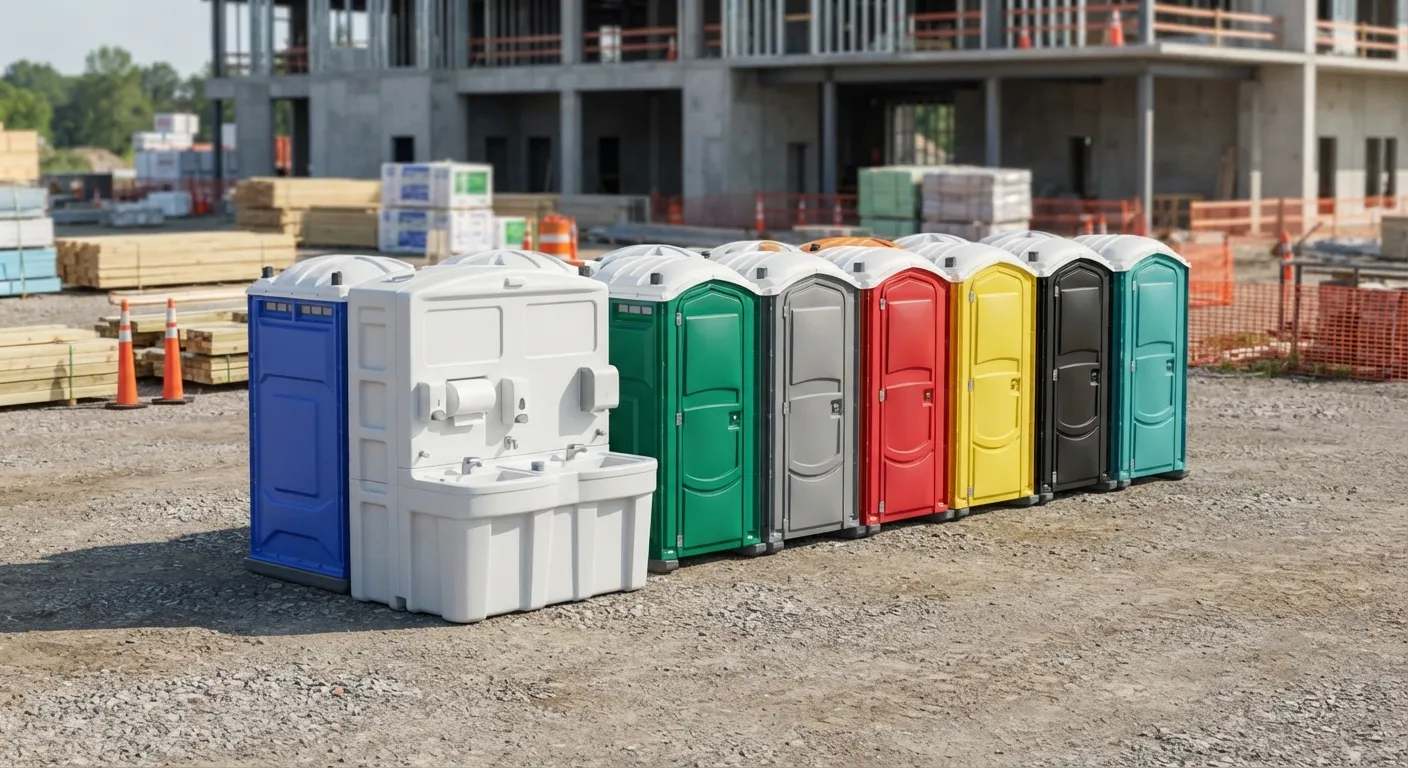
A 5K needs a tight cluster at start and finish; a marathon needs restrooms spread across the whole route and serviced mid-race if the field is large. Longer races mean longer hold times between stops, so we often bump up to deluxe flushable porta potty units at finish lines where runners linger for hours post-race. Events expecting VIP tents, sponsor areas or a beer garden sometimes add a restroom trailer rental instead of standard units; a 2 stall restroom trailer handles a small elite-athlete area, while an 8 stall restroom trailer suits a festival-scale finish line. Races in Castro Valley sometimes route near Fairview, about 3.3 miles southeast, or Cherryland, 4.4 miles southwest, and we've delivered to both, so course logistics that cross town lines aren't new to us. See our event restroom rental page for setups built around finish-line crowds, or marathon and race restrooms pricing details for larger fields.
| unit | duration | low | typical | high |
|---|---|---|---|---|
| standard | event | 200 | 400 | 800 |
| ada | day | 200 | 230 | 400 |
| trailer | event | 2499 | 3500 | 3899 |
Check our porta potty rental cost page for full pricing context, or request a quote with your runner count and course map.
How far in advance should I book race restrooms?
Book as soon as your course map and runner count are set, ideally weeks out for a large field. Race weekends compete with weddings and festivals for the same trucks, and standard units run a weekend rate typically between $125 and $400 depending on cluster size. Early booking also gives us time to plan delivery routes if your course crosses into Ashland or Norris Canyon.
Do I need accessible restrooms for a race?
Yes. ADA Standards section 213.2 requires at least 5 percent of any clustered group of single-user units to be wheelchair accessible, with a minimum of one no matter how small the cluster. Start lines and finish areas both count as clusters, so plan for at least one accessible unit at each.
Can restrooms be serviced mid-race for a large field?
Yes, for full-day or multi-day events we schedule service visits around your run times. ANSI/PSAI Z4.3 sets a baseline of one service per week for lighter use, but race-day crowds need same-day servicing built into the plan, not a weekly default.
What if my race route runs through a park with permit rules?
Placement in a public park or right of way needs confirming with the city before delivery. We don't guess at permit rules, we just tell you to check with Castro Valley before we drop equipment on city property.
Should aid stations have their own restrooms or share with the finish line?
Aid stations past mile 4 should have their own units. Runners in a half or full marathon can't backtrack to the finish, and a single aid station cluster serves runners for hours as the field spreads out, so plan restrooms at every major stop, not just the ends.
Next step
Get a delivery date
Tell us the address, the dates and the headcount. We size the order and confirm the route.