
How many restrooms does a county fair need?
Fair crowds spike hard around headline acts, food booths and the exit gates, so the math is different from a construction site. OSHA 1926.51(c) sets the baseline ratio for worksites, roughly 1 toilet for every 20 workers, but a fair is a public event with uneven foot traffic, and staff-only counts undersell it badly. Castro Valley Porta Pros works from expected attendance instead, then layers in extra units near stages, beer gardens and food rows where lines build fastest. Our how many porta potties do I need guide walks through the ratio for different event types if you want to run your own numbers before calling.
ADA Standards section 213.2 requires that at least 5 percent of clustered single-user units be accessible, with a minimum of one no matter how small the cluster. For a fair spread across several zones, that means accessible units at each restroom bank, not just one at the main entrance. Our ADA accessible porta potty units meet the 60 inch turning circle called out in ADA Standards 304.3.1, and the door clears the 32 inch minimum in ADA Standards 404.2.3. If your event footprint spans multiple lots or a midway plus a grandstand, ask about porta potty placement guide planning so units land where the crowd actually moves, not where it's just easiest to park a truck.
What restroom options work best for a county fair?
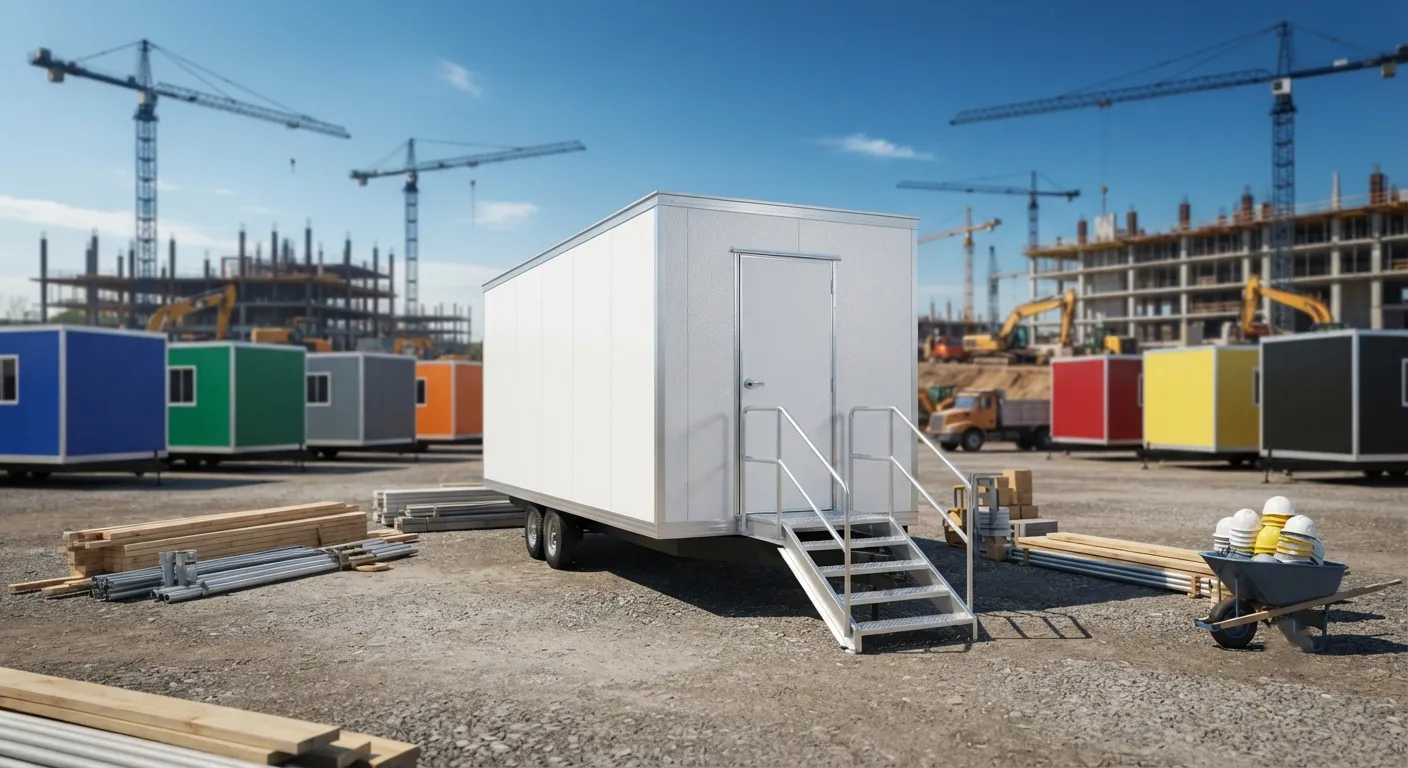
Standard units handle the bulk of foot traffic and cost less per stall than any other option, which matters when you're renting dozens at once. A standard porta potty rental runs in the event-rate band shown below, and a deluxe flushable porta potty upgrades the experience near VIP areas or sponsor tents. For fairs with a beer garden, a grandstand concert or a livestock competition drawing families all day, a restroom trailer rental or the larger 8 stall restroom trailer keeps lines shorter without multiplying single units across the grounds.
| unit | duration | low | typical | high |
|---|---|---|---|---|
| standard | event | 200 | 400 | 800 |
| deluxe | day | 85 | 300 | 1200 |
| ada | day | 200 | 230 | 400 |
| trailer | event | 2499 | 3500 | 3899 |
Food vendors handling raw ingredients or using degreasers need washing facilities under 29 CFR 1910.141(d)(2), which requires soap and towels or a hand-drying device, not just sanitizer. A handwashing station rental or portable sink rental placed near the food row covers that requirement and keeps health inspectors satisfied. If any vendor booth is doing painting, staining or pest treatment on site, OSHA 1926.51(f)(1) requires washing facilities specifically for that contaminant exposure. Fair organizers also lean on temporary fence rental or crowd control barrier rental to route foot traffic toward restroom clusters instead of letting crowds bottleneck at one bank of units.
Where should restrooms go on a fairgrounds layout?
Restrooms belong near high-traffic nodes: main gates, food courts, grandstands and any area where people queue for more than a few minutes. Castro Valley sits close enough to draw crews from Fairview, 3.3 miles southeast, and Cherryland, 4.4 miles southwest, so multi-zone deliveries across a large fairgrounds don't add much drive time between drops. A grease interceptor at a food vendor's fryer station gets pumped once fats, oils, grease and solids reach 25 percent of the liquid depth, which matters if the fair runs multiple days with heavy fry traffic; see grease trap pumping for that side of vendor sanitation.
Ground surfaces around each restroom cluster need to be stable and slip resistant per ADA Standards 302.1, so gravel lots or freshly mowed grass often need matting under accessible units. Reach ranges for handwash stations and paper dispensers should stay within the 48 inch high, 15 inch low forward reach in ADA Standards 308.2.1, and any latch or dispenser should operate one-handed under 5 pounds of force per ADA Standards 309.4. For fairs running past dusk, pair restroom zones with a light tower rental so pathways stay lit and visible. Multi-day fairs sometimes need extra dumpster capacity too; a roll-off dumpster rental or 10 yard dumpster rental near vendor rows keeps food waste from piling up between pickups.
How far in advance should I book restrooms for a county fair?
Book as soon as your fair dates and expected attendance are set, ideally weeks out during peak fair season. Large multi-day fairs need time to route delivery trucks across zones and confirm accessible unit counts. Ask about request a quote early so your unit count isn't a last-minute scramble.
Do I need a permit to place restrooms on fairgrounds property?
Permit rules vary by venue and by whether restrooms sit in a public right of way, so this needs confirming with the city before delivery. Check our porta potty permit requirements page for what to ask, and loop in fairgrounds management directly.
How often are restrooms serviced during a multi-day fair?
Service intervals depend on attendance, but the ANSI/PSAI Z4.3 baseline is one visit per week for lighter use. Fairs draw far heavier traffic, so daily or twice-daily service is common. See how often are porta potties cleaned for how that scales with crowd size.
Can Castro Valley Porta Pros handle restrooms across multiple fairground zones at once?
Yes. Multi-zone delivery is routine for fair-sized events, with units clustered by gate, food court and grandstand. Nearby routes through Ashland, 4.7 miles west, keep turnaround fast if a zone needs added units mid-event.
What happens if a fair extends an extra day?
Extensions are common with fairs tied to weather or attendance. Call ahead and we'll adjust the rental period and add service visits as needed, billing the extra day at the event rate shown above.
Next step
Get a delivery date
Tell us the address, the dates and the headcount. We size the order and confirm the route.