
How many portable toilets do I need?
OSHA 1926.51(c)(1) sets minimums for construction sites: one toilet for 20 workers or fewer, then one toilet seat and one urinal per 40 workers up to 200, then one per 50 workers at 200 and above. Events and temporary sites follow the same rule, a 50-person wedding needs at least one unit, but a 100-person outdoor festival works better with two or three. Check our guide on how many porta potties you need for your exact crew size and use case, then read our OSHA portable toilet requirements guide. Restaurants, food trucks and farm operations in Castro Valley have different rules. Agricultural hand-labor sites need one facility per 20 employees under OSHA 1928.110. When in doubt, call us and describe your setup.
What does placement require?
Placement depends on whether the unit sits on your private property or in Castro Valley's public right of way. Private property placement is straightforward, level ground, truck access for delivery and service visits. If you need a unit in a public area, confirm requirements with the city first, since placement rules vary. A standard unit is about 44 by 48 inches on the ground and stands about 92 inches tall, so measure your space. Read our porta potty placement guide for details on access roads, distance from water sources and visibility, and learn how to winterize a porta potty if you're renting in cold months. Roll-off dumpster delivery needs about 60 feet of straight clearance behind the truck. ADA accessible units require a 60-inch turning circle under ADA Standards section 304.3.1 and a 36-inch clear approach width per ADA Standards section 403.5.1.
What's the cost breakdown?
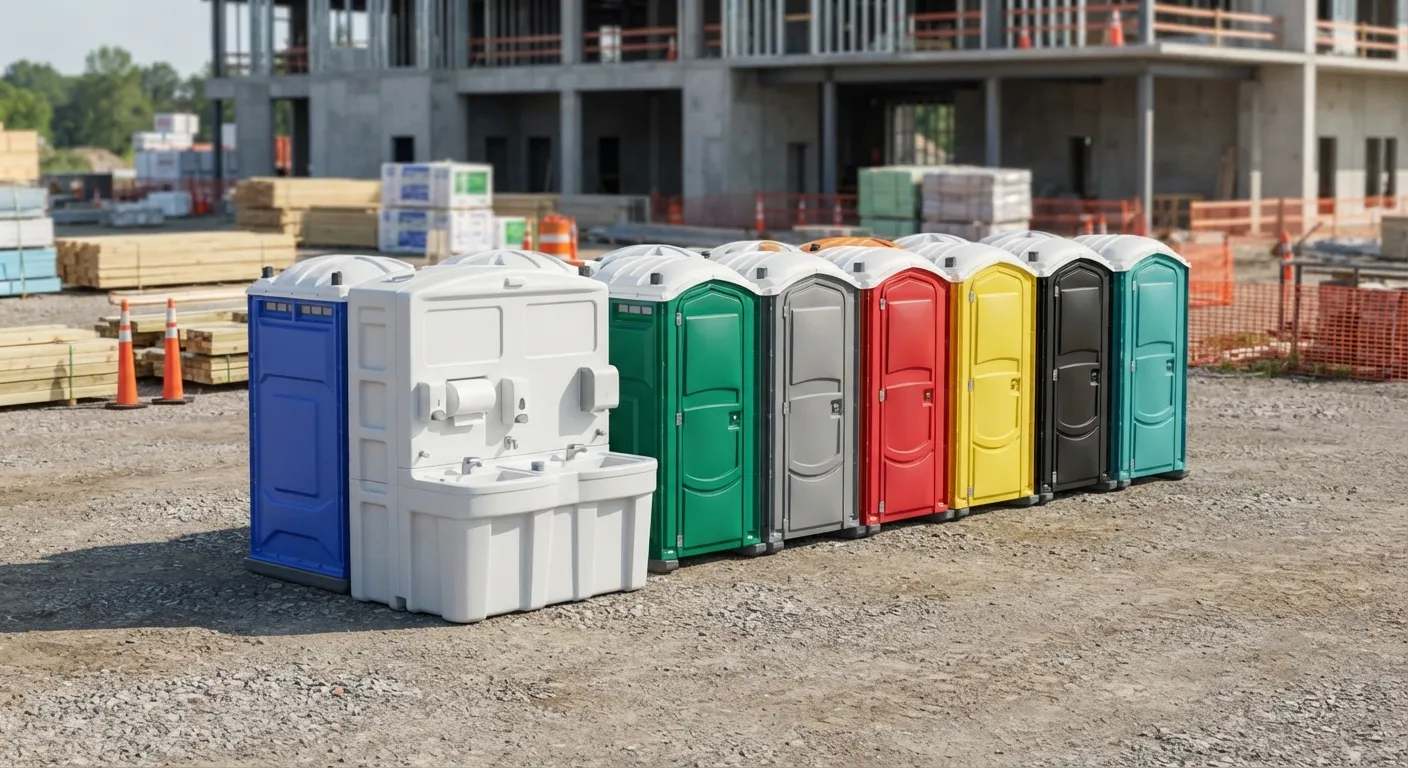
Daily, weekly and monthly rates depend on the unit type and how often it gets serviced. A standard porta potty rents from $100 to $350 per day, $130 to $500 per week, or $125 to $325 per month, with delivery and service fees separate. Deluxe flushable units run from $85 to $1,200 per day or $150 to $290 per week. ADA accessible toilets start at $200 per day. Roll-off dumpsters range from $51 to $112 per day, $426 to $778 per week, or $91 to $500 per month. Restroom trailers range from $150 to $1,650 per week depending on stall count and amenities. Storage containers rent from $100 to $250 monthly. Septic pumping costs $150 to $300 per service for residential tanks, which are typically pumped every 3 to 5 years. Every quote includes delivery, pickup and service intervals tailored to your crew size and event length. Get a specific number by calling us with your dates and location in Castro Valley.
How often do portable toilets get serviced?
Weekly service is standard for up to 10 users over a 40-hour work week, per ANSI/PSAI Z4.3. High-traffic events, large construction crews and summer heat mean more frequent pumping. Portable toilets hold 60 to 70 gallons, so a busy site might need twice-weekly service or an extra unit. Castro Valley Porta Pros schedules pickups at your preferred day and time. Emergency service is available if a unit overflows or breaks down.
Do I need a handwashing station?
Handwashing facilities are required where employees apply paints, coatings, herbicides or insecticides, per OSHA 1926.51(f)(1). General construction sites need potable water under OSHA 1926.51(a)(1). Portable sinks and handwashing stations must supply soap and towels or a hand drying device per 29 CFR 1910.141(d)(2), hand sanitizer alone doesn't meet code. Food service, agriculture and healthcare jobs always need them. Castro Valley events often do too. Call us to confirm your industry's rules.
What can't go in a dumpster?
Hazardous waste, electronics, appliances with refrigerant, tires, batteries, asbestos and medical waste are banned. Concrete, soil and construction debris sometimes need specialized rolloffs. See our complete guide on what cannot go in a dumpster. We'll tell you upfront if your material needs a different container.
How often should I pump my septic tank?
Residential septic tanks are typically pumped every 3 to 5 years, driven by tank size and household size. Commercial systems and high-volume users pump more often. Grease traps pump when fats, oils, grease and solids reach 25 percent of the liquid depth. Watch for septic tank warning signs like slow drains or odors.
Next step
Get a delivery date
Tell us the address, the dates and the headcount. We size the order and confirm the route.