
How many restrooms does a farm operation need?
Start with your crew count and where they actually work, not where the barn is. OSHA 1928.110 requires potable water, toilet facilities and handwashing for hand-labor employees, one unit per 20 workers, positioned within a quarter mile walk of wherever people are picking, pruning or packing. On a spread-out property that means more than one standard porta potty rental placed at different field edges, not one unit parked by the equipment shed. Castro Valley Porta Pros walks the property with you before quoting, because a single unit at the entrance does nothing for a crew working the back forty. Pricing for a standard unit runs by the day, week or month, and most farm accounts land on monthly terms since planting and harvest cycles run long. If you are unsure how many stations your acreage and crew size actually require, the porta potty placement guide walks through spacing, and our how many porta potties do I need page runs the math against worker counts directly. Ranch and vineyard operations near Castro Valley also lean on handwashing station rental units set beside each toilet cluster, since field sanitation compliance covers both, and some pair a deluxe flushable porta potty for crew leads who want a step up from the standard unit.
Do farm restrooms need handwashing stations too?
Yes. OSHA 1928.110 pairs toilet facilities with handwashing right in the same rule, and 29 CFR 1910.141(d)(2) requires soap and towels or a hand-drying device at any wash station, not sanitizer alone. That matters for produce handling and food safety audits as much as it does for the crew's comfort, and it's the same requirement covered on our handwashing station requirements page. A portable sink rental unit stocked with real soap and towelling satisfies both the labor rule and any buyer inspection that shows up at harvest. Some operations try to get by with a hand sanitizer station rental alone, and it holds up fine for a break room or an office trailer, but it does not meet the washing facility language in 1910.141(d)(2) for hand-labor crews. Castro Valley Porta Pros pairs sinks and toilets on the same delivery run, sometimes alongside a temporary fence rental to keep livestock away from the units, so nothing sits stranded on the far side of the property. If your crew handles pesticide or herbicide application, that adds a separate washing requirement: OSHA 1926.51(f)(1) calls for washing facilities specifically where workers apply paints, coatings, herbicides or insecticides, and that's worth flagging to your foreman before spray season starts, not after.
Where should units go on a working farm?
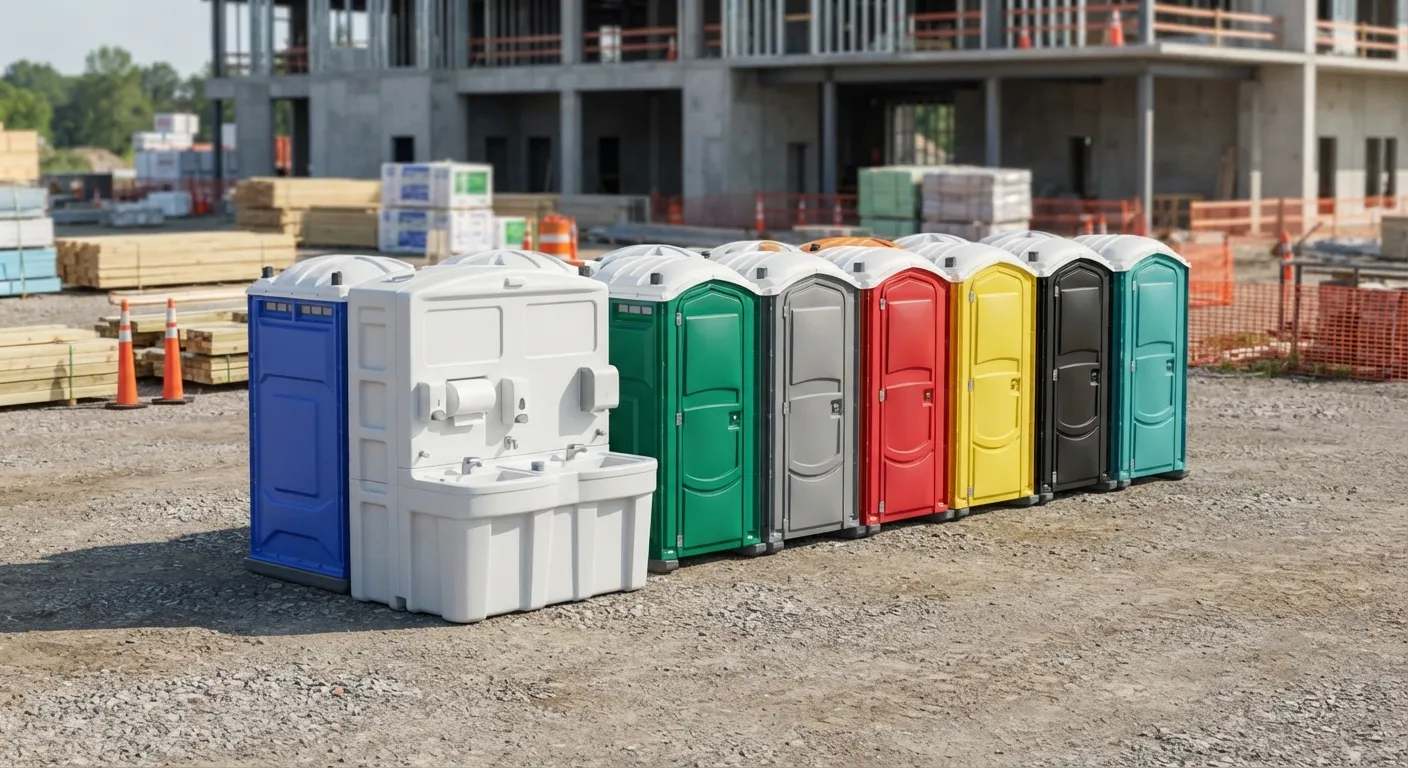
Put them close to the work, not close to the road. A standard unit sits about 44 by 48 inches on the ground and stands roughly 92 inches tall, small enough to tuck against a fence line or equipment turnout without blocking tractor paths. Castro Valley sits inland enough that most farm parcels have room for this, unlike tighter residential lots in Cherryland, 4.4 miles southwest, or Ashland, 4.7 miles west. Service access matters as much as placement: our trucks need a clear path in and don't require the 60 feet of straight clearance a roll-off dumpster rental delivery does, but a rutted access road still slows the route. ANSI/PSAI Z4.3 sets the baseline service interval at once per week for up to 10 users over a 40 hour week, and farm crews working full shifts across multiple units usually need that schedule tightened, especially during harvest push. If your operation runs closer to Fairview, 3.3 miles southeast, or out toward Norris Canyon, 7.8 miles northeast, routing is straightforward since both sit inside our regular service area loop. For crews working a defined event like a farm stand opening or harvest festival, the farm and agricultural restrooms setup differs from a county fair restrooms crowd load, so tell us which one you're planning, and check our event restroom rental page if the public is invited.
Operations that also run a packing shed or on-site kitchen should check grease trap pumping schedules too. A grease interceptor gets pumped once fats, oils, grease and solids hit 25 percent of the liquid depth, and that clock runs faster than most farm managers expect once a commercial kitchen gets busy, so it's worth checking septic pumping service scheduling at the same time.
How much does a farm restroom rental cost?
A standard unit runs in the $125 to $325 range monthly, with day and week rates lower for short harvest pushes. Multi-unit farm accounts usually save by locking in a monthly term instead of renewing weekly. Delivery fees apply separately; ask about routing if your property spans several fields, and see porta potty rental per day if a short push is all you need.
Can I rent restrooms just for harvest season?
Yes. Many farm accounts rent for eight to twelve weeks and return the units after. Weekly terms work well for this since they're priced between day and month rates. Tell us your harvest window when you request a quote and we'll set pickup dates in advance.
Do I need an ADA unit on a farm site?
If the public visits your farm stand, festival or U-pick event, yes. ADA Standards section 213.2 requires at least 5 percent of clustered single-user units be accessible, with a minimum of one. Worker-only field units generally don't trigger this requirement.
What size crew needs more than one restroom?
OSHA 1928.110 sets the line at 20 hand-labor workers per facility. Past that, add units, and keep each one within a quarter mile walk of where people are actually working. Spread-out fields usually need this sooner than the headcount alone suggests.
Can handwashing stations run without running water?
Yes, portable sink units carry their own fresh water and holding tanks. They still need soap and a towel or drying device to meet 29 CFR 1910.141(d)(2). Sanitizer-only stations don't satisfy that standard for hand-labor crews.
Next step
Get a delivery date
Tell us the address, the dates and the headcount. We size the order and confirm the route.