
How does a portable toilet actually work?
The unit is simple by design. Waste drops into the holding tank, and a blue chemical solution breaks down solids and knocks back odor between service visits. There is no water tank, no flush handle on a standard porta potty rental, just a seat, a tank, and ventilation. A deluxe flushable porta potty adds a foot pump that pulls a small rinse of water into the bowl, which is closer to how do flushable porta potties work in practice: same tank underneath, just a rinse cycle on top. Portable sink units work on the same non-pressurized idea. A portable sink rental uses a foot pump or hand crank to draw fresh water from an onboard tank, and gray water drains into a separate holding tank below, which is basically how does a portable sink work in one sentence. For jobsites near Fairview, 3.3 miles southeast of Castro Valley, or out toward Cherryland, our trucks handle both drop-off and the weekly pump-out on the same route.
What keeps a porta potty from smelling?
Chemical treatment does most of the work, plus regular pump-outs. The blue liquid you see in a fresh unit is a deodorizer and digestant blended for portable toilet chemicals, and it is different from what goes into a home system, so do not confuse portable toilet chemicals near me with septic tank cleaning chemicals meant for a residential tank. Ventilation stacks pull odor up and out rather than letting it pool at seat level. Service crews swap the tank contents, rinse, and redose on the schedule set at delivery, which answers how often are porta potties cleaned for most rental accounts. If odor control matters for a wedding or backyard gathering, the deluxe flushable porta potty line runs a slightly larger reservoir and holds up better over a long weekend. Curious whether a unit near your event will hold up. See do porta potties smell for the full breakdown by unit type and season, including porta potty in winter conditions specific to the Bay Area.
How many porta potties does a jobsite actually need?
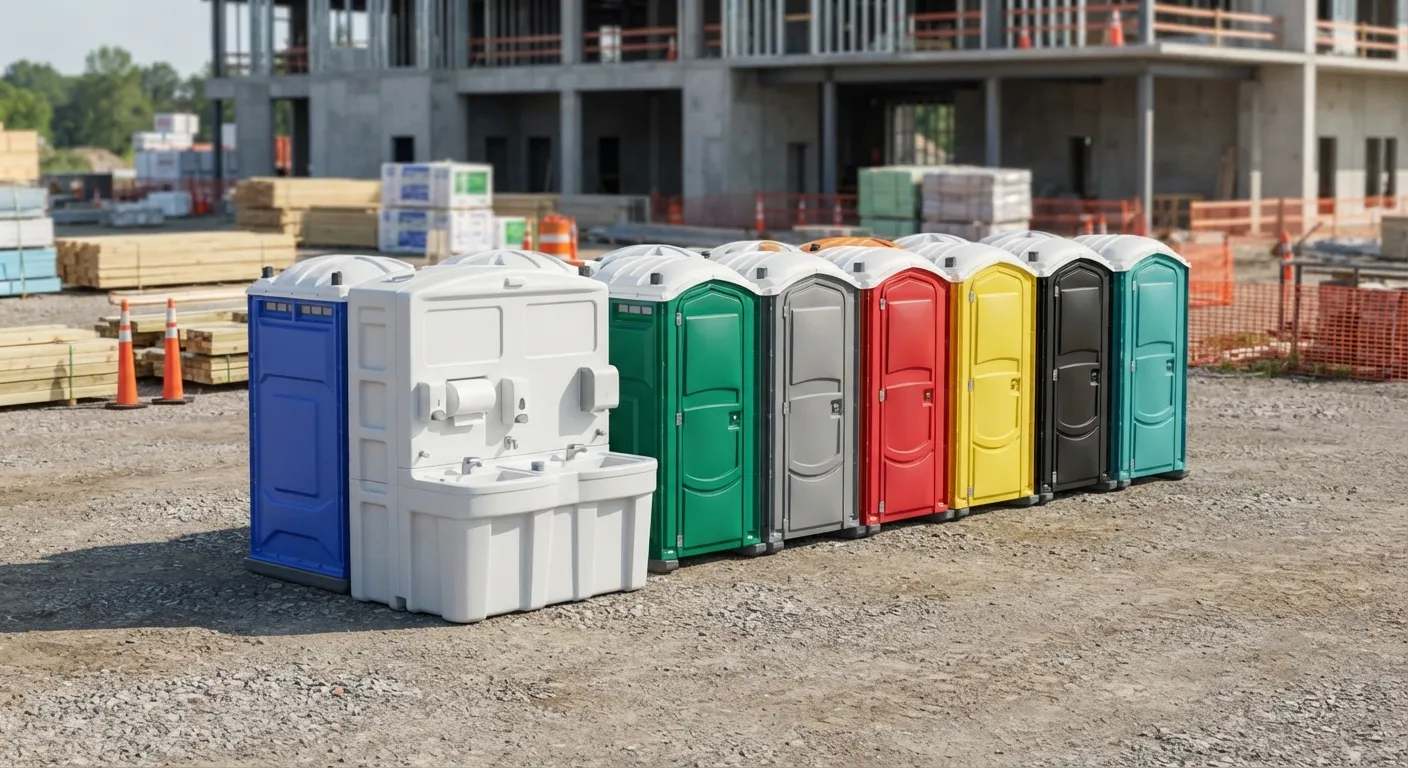
OSHA sets the ratio, not guesswork. Under OSHA 1926.51(c)(1), a construction site with 20 workers or fewer needs 1 toilet facility; from 20 up to 200 workers, add 1 toilet seat and 1 urinal per 40 workers; at 200 or more, that ratio changes to 1 per 50. A general contractor running a 35-person crew in Castro Valley needs to run that math before delivery day, and our OSHA portable toilet requirements page walks through the table. Every cluster of units also needs an accessible option: ADA Standards section 213.2 requires at least 5 percent of clustered single-user units to be ADA-compliant, with a minimum of one, and that unit needs a 60 inch turning circle inside per ADA Standards section 304.3.1. See our ADA accessible porta potty page for specs, or use the how many porta potties do I need calculator before you call in an order.
How does servicing and pumping actually happen?
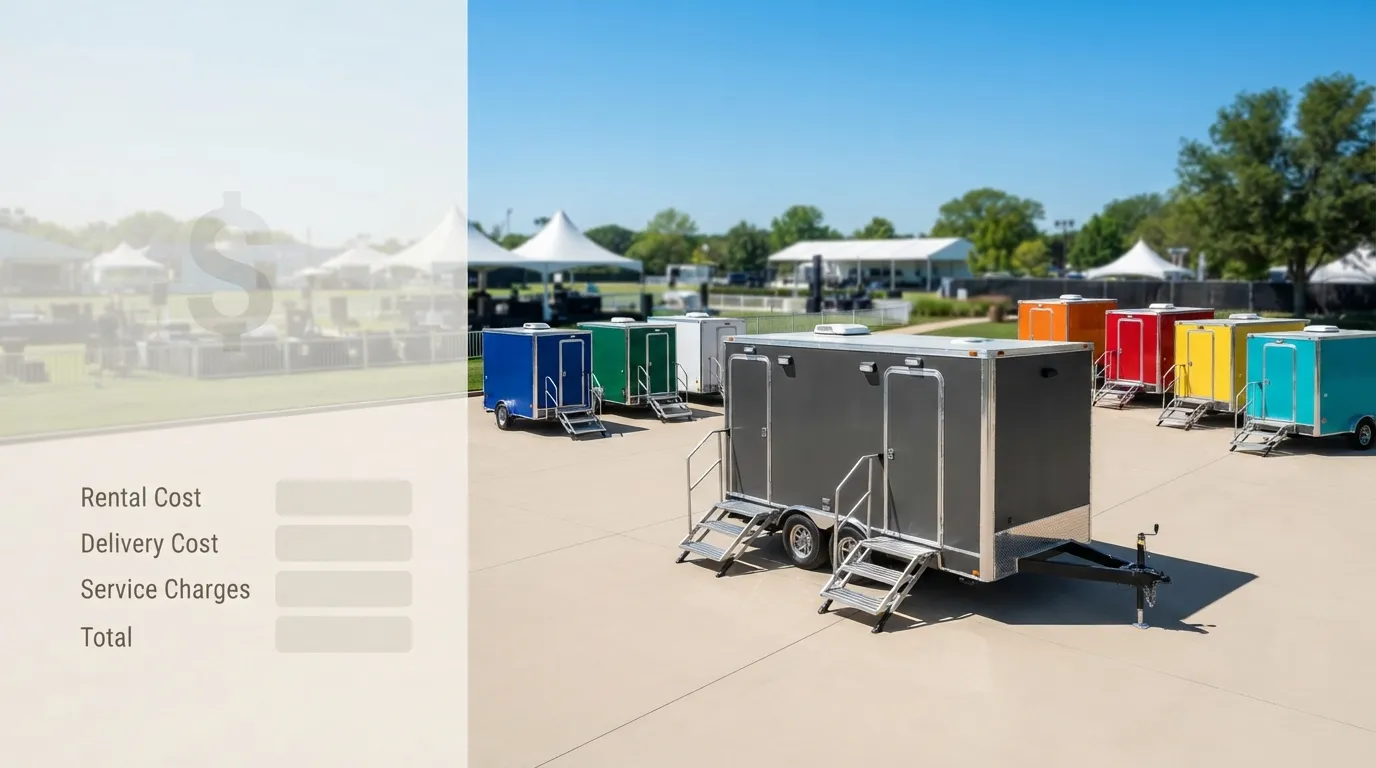
A service truck arrives, vacuums the tank, rinses the interior, and redoses chemical, usually in under ten minutes per unit. This is separate from septic tank cleaning chemicals used in a home system: a residential septic tank is typically pumped every 3 to 5 years depending on tank size and household size, which is a different rhythm than the weekly service a jobsite unit needs. If you are running septic on a property instead of rental units, our septic pumping service and septic tank warning signs pages cover that separately. Grease interceptors follow yet another rule: they get pumped once fats, oils, grease and solids reach 25 percent of liquid depth, which is a food-service concern more than a jobsite one, covered on grease trap pumping. Handwashing is a related but distinct requirement. 29 CFR 1910.141(d)(2) requires soap and towels or a hand-drying device at wash stations, and hand sanitizer alone does not satisfy that. See handwashing station rental or handwashing requirements for what qualifies.
How do camping porta potties work differently from jobsite units?
Camping units are smaller, self-contained, and often carried in rather than delivered by truck, but they run the same basic tank-plus-chemical system as a standard unit. For group campouts or trailhead events, camping porta potty rentals from Castro Valley Porta Pros deliver like any standard order.
Does a construction worker need to walk far to reach a porta potty?
No. OSHA does not set a hard distance for construction, but field sanitation rules for agriculture, OSHA 1928.110, require facilities within a quarter mile walk. Most jobsite placements follow that same practical spacing. See porta potty placement guide for layout tips.
What is inside the tank on a standard unit?
Waste, water, and a blue deodorizing chemical that breaks down solids between services. There is no flush water tank on a standard unit, just the holding tank itself, sized at 60 to 70 gallons, per standard porta potty rental specs.
How much does a standard rental cost per day in Castro Valley?
Daily rates for a standard unit run from 100 to 350 dollars, most landing near 150. Weekly and monthly terms usually work out cheaper per day. Full pricing lives on porta potty rental cost.
Can I get a porta potty delivered same day near Danville?
Availability depends on route timing, and Danville sits 12.9 miles northeast of Castro Valley. Call ahead for tight timelines, or check emergency porta potty rental for rush options.
Next step
Get a delivery date
Tell us the address, the dates and the headcount. We size the order and confirm the route.